Why Pricing Is One of the Hardest Decisions for Salon Owners
Setting prices for your hair salon services is one of the most stressful decisions you will make as a business owner. Price too low and you burn out working long hours for thin margins. Price too high without the perceived value to match and clients walk out the door. The truth is, most hairdressers undercharge because they are afraid of losing clients.
This guide will walk you through a practical framework for setting prices that reflect your skill, cover your costs, and keep your chairs full.

Understand Your True Costs First
Before you set a single price, you need to know exactly what it costs you to deliver each service. Many salon owners skip this step and just copy what the salon down the street charges. That is a mistake.
Calculate Your Cost Per Service
Break down the cost of every service into three categories:
- Product cost: How much color, developer, toner, shampoo, and styling product do you use per service? Measure it. A full balayage might use 60 dollars worth of product.
- Time cost: How long does the service take, including consultation, application, processing, and styling? Multiply by your hourly labor cost (your salary plus benefits, divided by working hours).
- Overhead cost: Rent, utilities, insurance, software subscriptions, towel service, and equipment depreciation. Divide your monthly overhead by the number of services you perform to get a per-service overhead cost.
Add these three together and you have your minimum price — the floor below which you lose money.
Research Your Market Without Copying It
Knowing what competitors charge is useful context, but it should not dictate your prices. Here is how to use market research wisely.
Survey Your Local Competition
Check the prices of five to ten salons in your area that serve a similar clientele. Note their price range for key services like cuts, color, and highlights. This gives you a benchmark, not a target.
Position Yourself Intentionally
Decide where you want to sit in the market. Are you a budget-friendly salon for families? A mid-range neighborhood spot? A premium destination salon? Your positioning should match your target client, your skill level, and the experience you provide. Trying to be everything to everyone leads to mediocre pricing and a confused brand.
Use Value-Based Pricing Instead of Cost-Plus
Cost-plus pricing means you take your costs and add a markup. It is simple but it leaves money on the table. Value-based pricing means you charge based on the value the client receives.
What Drives Perceived Value
- Your expertise and specialization: A stylist known for balayage can charge more for balayage than a generalist.
- The client experience: A luxurious salon with beverages, comfortable seating, and a relaxing atmosphere commands higher prices than a bare-bones shop.
- Results and consistency: Clients pay more when they trust they will leave looking great every single time.
- Convenience: Easy booking, flexible hours, and reliable scheduling have real value.
If you invest in these areas, you earn the right to charge more. And clients will happily pay because they see the difference.
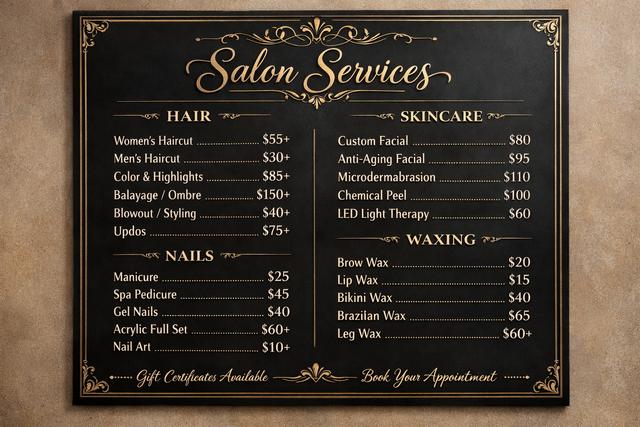
Structure Your Service Menu Strategically
How you present your prices matters as much as the numbers themselves.
Offer Tiered Pricing
Create two or three tiers for your main services based on stylist experience level. A junior stylist charges less than a senior stylist, who charges less than the salon owner or creative director. This gives clients options without devaluing your top talent.
Bundle Services for Higher Ticket Values
Create packages that combine popular services at a slight discount compared to booking them separately. For example, a "Color and Style Package" that includes color, cut, blow-dry, and a conditioning treatment. Bundles increase your average ticket while giving clients the feeling of getting a deal.
Avoid Too Many Options
A menu with 50 line items overwhelms clients. Group similar services together and keep descriptions clear. If a client has to ask what the difference is between six types of highlights, your menu is too complicated.
When and How to Raise Your Prices
If you have not raised your prices in over a year, you are probably overdue. Costs go up every year — rent, products, insurance — and your prices should keep pace.
Raise Prices Annually
A small annual increase of three to five percent is easier for clients to absorb than a large jump every few years. Frame it as a normal part of doing business, because it is.
Communicate the Increase Professionally
Give clients 30 days notice before a price increase takes effect. A simple message works: "Starting next month, our prices will be updated to reflect our continued investment in quality products and education. We appreciate your loyalty and look forward to seeing you." Do not apologize. Do not over-explain.
Grandfather Selectively
For your most loyal, long-term clients, consider honoring old prices for one or two visits after the increase. This is a goodwill gesture, not an obligation. Do not extend it indefinitely.
Stop Discounting — Start Adding Value
Value-based pricing works even better when paired with a strong client retention strategy.
Discounts train clients to wait for deals. Instead of cutting your prices, add value at the same price point. Offer a complimentary deep conditioning treatment during slow periods. Include a free fringe trim between appointments. Add a scalp massage to every color service. These cost you very little but increase perceived value significantly.
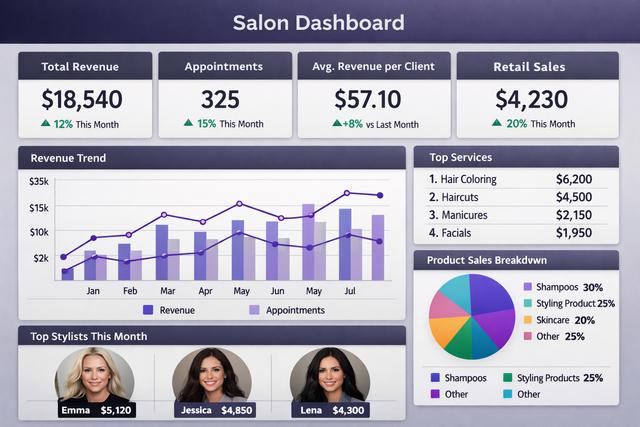
Track Your Numbers Monthly
Tracking metrics is easier with the right systems in place — see how to manage a busy hair salon efficiently.
Once your prices are set, track these key metrics every month:
- Average service ticket: Total revenue divided by total appointments. Is it going up?
- Rebooking rate: What percentage of clients book their next appointment before leaving?
- Product cost ratio: Product costs should stay below 10-15% of service revenue.
- Chair utilization: What percentage of available appointment slots are booked?
If your chairs are consistently full and clients are rebooking, you can likely raise your prices further. If you have too many empty slots, focus on value and marketing before cutting prices.
The Bottom Line
Promote your value through social media marketing so clients see what they are paying for.
Pricing is not a one-time decision. It is an ongoing process of understanding your costs, communicating your value, and adjusting as your business grows. Charge what your work is worth, invest in the client experience, and raise your prices regularly. Your skills and time are valuable — your prices should reflect that.